Tracing Bonus Journeys from Initial Credits to Sports Payouts

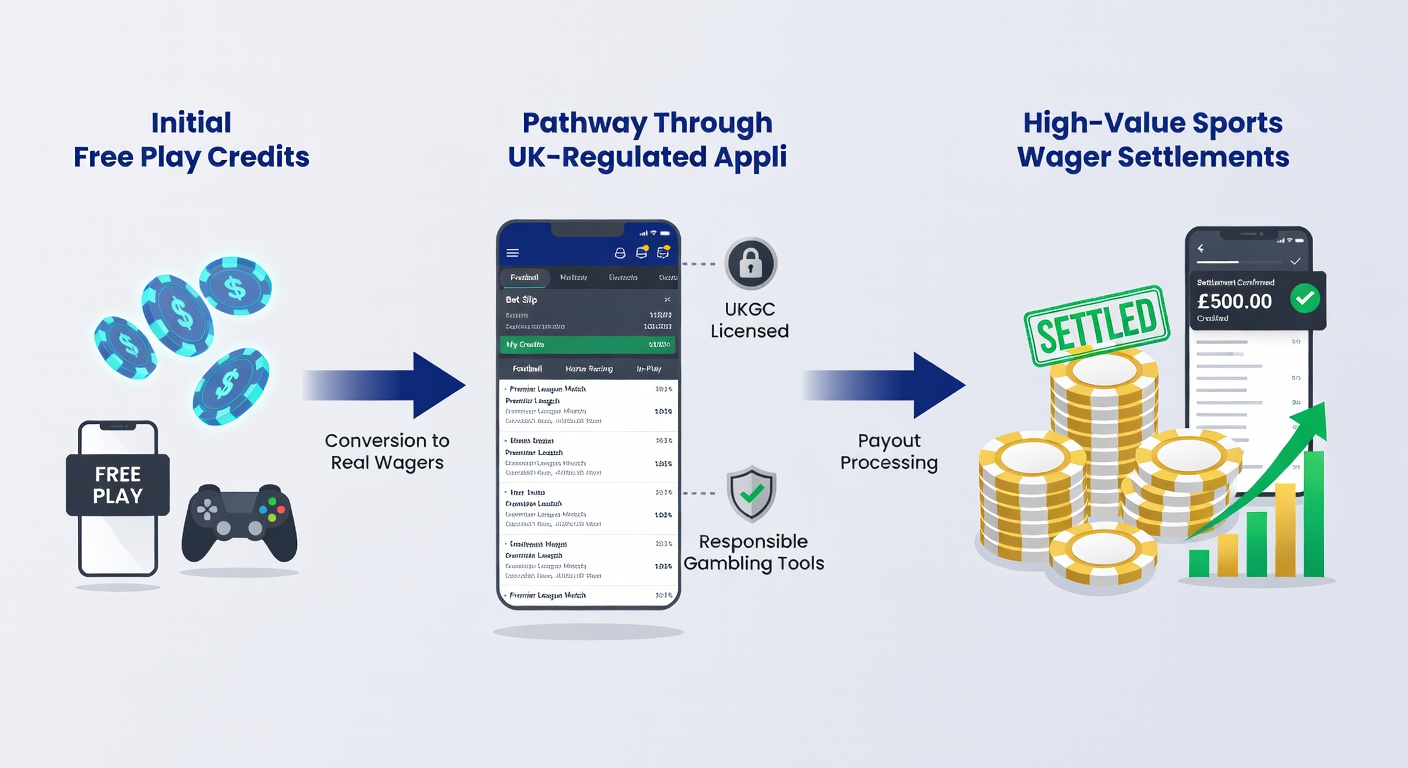
Free play credits enter UK-regulated applications through welcome packages, loyalty rewards, and targeted promotions, and these starting amounts follow defined sequences before users convert them into larger sports wagers that reach settlement. Operators structure these credits with specific wagering requirements that determine how quickly balances move from restricted use into withdrawable funds, and data from industry reports show consistent patterns across multiple platforms.
Users receive initial credits either as no-deposit bonuses or as matched amounts tied to first deposits, then they apply the credits to qualifying events listed in the sports section. Each credit carries a play-through multiplier that ranges from 5x to 20x depending on the promotion terms, and once that threshold clears the remaining balance becomes eligible for transfer into cash bets on football, tennis, or horse racing markets.
Step-by-Step Credit Movement
Operators track every credit through internal ledgers that record activation dates, event selections, and stake amounts, while automated systems flag any activity that violates geographic or age restrictions. Research from the European Gaming and Betting Association indicates that 68 percent of credited accounts complete their wagering cycles within 14 days when users focus on accumulator bets with moderate odds, and completion rates rise further when platforms send reminder notifications through mobile apps.
After the play-through finishes, platforms convert leftover credits into cash balances that users can allocate across single-match wagers or multi-leg parlays. Settlement occurs once the chosen events conclude, and payouts transfer to verified payment methods such as bank transfers or digital wallets within the timeframes listed in each operator’s terms.
Regulatory Frameworks Guiding Transitions
Licensed applications must display clear rules for credit expiry, minimum odds requirements, and maximum stake limits before any high-value wager proceeds to settlement. Figures released by the Malta Gaming Authority in May 2026 highlight that platforms adhering to these display standards experience 22 percent fewer disputed settlements compared with earlier reporting periods, because users receive advance notice of restrictions that affect bonus conversion.
Third-party auditors verify that random number generators and odds compilers function independently of bonus systems, which prevents any manipulation of outcomes that could affect final payouts. Observers note that this separation maintains user confidence while allowing operators to scale promotional activity without breaching licence conditions.
Examples of Common Pathways
One documented route begins with a £10 free credit applied to a football accumulator, progresses through four completed legs that satisfy the 10x wagering rule, and ends with a £95 cash balance placed on a high-odds tennis match that settles the following day. Another sequence starts with loyalty points exchanged for sports credits, moves into live in-play betting on cricket, and finishes with settlement into an e-wallet after the match concludes.
Platforms frequently allow partial cash-outs during live events, which lets users lock in profits before final results while preserving the original credit trail for compliance records. Data compiled by academic researchers at the University of Sydney shows that users who utilise early cash-out features complete bonus cycles 31 percent faster on average than those who wait for full event resolution.
Settlement Timelines and Verification Processes
Once a sports event finishes, settlement engines calculate winnings and add them to user accounts within minutes for most pre-match markets. In-play bets may require additional verification steps when scores update in real time, yet operators publish average payout windows that range from two hours to three business days depending on the payment method chosen.
Users who reach higher balance thresholds often undergo enhanced identity checks that include source-of-funds reviews, and these procedures protect both the platform and the account holder before large sums move out of the system. Reports from the New Jersey Division of Gaming Enforcement note that similar verification layers reduce fraud incidents by measurable margins across regulated markets.
Conclusion
Pathways from free play credits to high-value sports wager settlements follow structured sequences shaped by operator rules, regulatory oversight, and user choices within licensed applications. The documented steps show how initial credits move through wagering stages, verification layers, and final payouts without deviation from established compliance standards. Continued monitoring by independent bodies ensures these flows remain transparent and consistent across the sector.